
Concrete Compaction
Achieve Stronger, Denser, and More Durable Concrete with Proper Compaction
Concrete Compaction is the process of removing entrapped air from freshly placed concrete to achieve maximum density, strength, and durability. Proper compaction ensures that concrete completely fills the formwork, surrounds reinforcing steel, and eliminates internal voids or honeycombing that can weaken the structure.
Effective compaction is one of the most critical steps in concrete construction. Without adequate compaction, even a well-designed concrete mix may fail to achieve its intended performance, resulting in reduced strength, increased permeability, and premature deterioration.
At QC LAB Solution Bangladesh, we supply high-quality concrete compaction equipment and laboratory testing solutions for contractors, ready-mix plants, quality control laboratories, universities, consultants, and government agencies throughout Bangladesh.
What is Concrete Compaction?
Concrete compaction is the process of consolidating freshly mixed concrete by removing trapped air and ensuring that the mix becomes dense and homogeneous. Depending on the type of concrete and construction application, compaction may be achieved manually or with mechanical vibration.
Properly compacted concrete provides:
- Higher compressive strength
- Improved durability
- Better bond with reinforcement
- Reduced permeability
- Smooth surface finish
- Longer service life
Importance of Concrete Compaction
Concrete compaction is essential because it:
- Eliminates air voids and honeycombing.
- Increases concrete density.
- Improves compressive and flexural strength.
- Enhances durability and watertightness.
- Ensures complete encapsulation of reinforcement.
- Improves surface appearance.
- Reduces maintenance costs.
- Supports quality assurance (QA) and quality control (QC).
Principle of Concrete Compaction
Fresh concrete contains entrapped air introduced during mixing and placement. Mechanical vibration or other compaction methods reduce internal friction between particles, allowing aggregates to settle into a denser arrangement while trapped air rises to the surface and escapes.
The result is a compact, uniform concrete mass with improved mechanical properties and durability.
Methods of Concrete Compaction
1. Internal Vibration
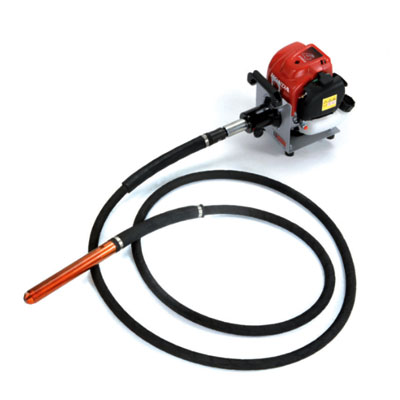
An internal (needle or poker) vibrator is inserted directly into the fresh concrete. This is the most common method for reinforced concrete structures such as columns, beams, slabs, and foundations.
2. External Vibration
External vibrators are attached to the outside of the formwork and are suitable where internal vibrators cannot be used or where reinforcement is congested.
3. Surface Vibration
Surface vibrators or vibrating screeds are used for compacting slabs, pavements, and industrial floors.
4. Vibrating Table
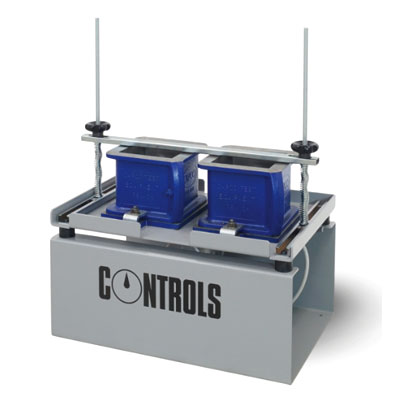
A vibrating table is commonly used in laboratories and precast concrete plants to compact small specimens, moulds, and precast elements.
5. Manual Compaction
For low-workability concrete or small projects, manual compaction using tamping rods or hand tools may be employed, although mechanical vibration is generally preferred for structural concrete.
Equipment Required
Typical concrete compaction equipment includes:
- Internal (Needle/Poker) Vibrator
- External Concrete Vibrator
- Surface Vibrator
- Vibrating Table
- Vibrating Screed
- Tamping Rod
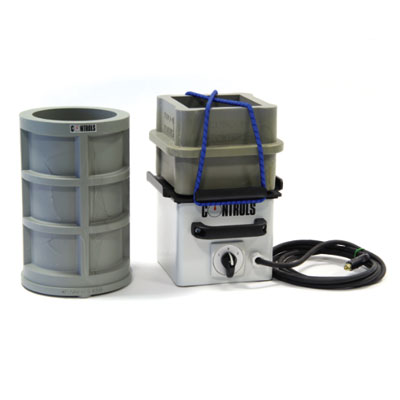
- Concrete Moulds
- Power Unit and Flexible Shaft (for internal vibrators)
- Laboratory Compaction Equipment
Using properly maintained equipment ensures effective compaction and consistent concrete quality.
Applications
Concrete compaction is widely used in:
- Residential buildings
- Commercial buildings
- High-rise structures
- Bridges and flyovers
- Roads and highways
- Airport pavements
- Dams and hydropower projects
- Industrial flooring
- Precast concrete manufacturing
- Tunnels and underground structures
- Ready-mix concrete plants
- Construction material laboratories
Common Testing Standards
Concrete compaction and specimen preparation are carried out in accordance with internationally recognized standards, including:
- ASTM C31/C31M – Making and Curing Concrete Test Specimens in the Field
- ASTM C192/C192M – Making and Curing Concrete Test Specimens in the Laboratory
- ASTM C143 – Slump Test for Fresh Concrete
- EN 12390 – Testing Hardened Concrete
- EN 12350 – Testing Fresh Concrete
- ACI 309R – Guide for Consolidation of Concrete
- IS 516 – Methods of Tests for Strength of Concrete
- IS 1199 – Methods of Sampling and Analysis of Concrete
Compliance with these standards ensures consistent and reliable concrete performance.
Benefits of Proper Concrete Compaction
Using proper concrete compaction techniques provides:
- Higher compressive strength
- Improved bond with reinforcement
- Reduced honeycombing
- Lower permeability
- Increased durability
- Better surface finish
- Improved freeze-thaw resistance
- Longer structural service life
- Reduced repair and maintenance costs
Why Choose QC LAB Solution Bangladesh?
QC LAB Solution Bangladesh is a trusted supplier of civil engineering and construction material testing equipment, offering complete laboratory solutions for concrete, cement, aggregates, soil, asphalt, steel, and geotechnical testing.
Our Advantages
- Premium-quality concrete compaction equipment
- Advanced laboratory and field testing solutions
- ASTM, EN, ACI, and IS compliant products
- Professional installation and commissioning
- Calibration and maintenance support
- Technical training
- Reliable after-sales service
- Competitive pricing
- Fast delivery across Bangladesh
- Expert engineering consultation
We are committed to helping construction professionals achieve accurate testing, effective compaction, and superior concrete quality.