
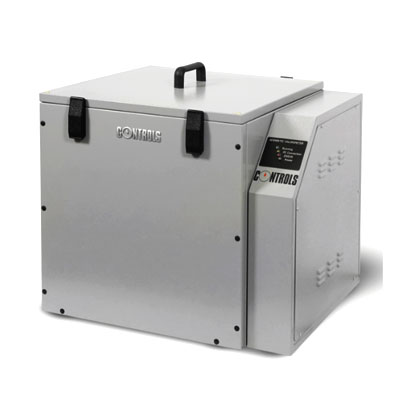
Heat of Hydration of Fresh Concrete
Accurate Heat of Hydration Testing for High-Quality Concrete Construction
The Heat of Hydration of Fresh Concrete refers to the heat generated during the chemical reaction between cement and water, known as hydration. As cement hydrates, it releases thermal energy that raises the temperature of fresh concrete. Monitoring this temperature rise is essential for evaluating concrete performance, especially in mass concrete structures where excessive heat can lead to thermal cracking and reduced durability.
Heat of hydration testing enables engineers to understand temperature development, optimize concrete mix designs, and implement effective temperature control measures during construction.
At QC LAB Solution Bangladesh, we provide advanced heat of hydration testing and concrete temperature monitoring equipment for construction companies, ready-mix plants, laboratories, universities, consultants, and infrastructure projects across Bangladesh.
What is the Heat of Hydration?
The Heat of Hydration is the amount of heat released when cement reacts chemically with water. This reaction begins immediately after mixing and continues as the concrete hardens and gains strength.
The rate and quantity of heat generated depend on several factors, including:
- Type of cement
- Cement content
- Water-cement ratio
- Use of supplementary cementitious materials (SCMs)
- Ambient temperature
- Concrete member size
- Curing conditions
Understanding the heat of hydration is particularly important for large concrete placements, where internal temperatures can become significantly higher than surface temperatures.
Importance of Heat of Hydration Testing
Heat of hydration testing helps to:
- Monitor temperature rise in fresh concrete.
- Prevent thermal cracking in mass concrete.
- Optimize concrete mix design.
- Evaluate cement hydration characteristics.
- Improve durability and long-term performance.
- Ensure compliance with project specifications.
- Support quality assurance (QA) and quality control (QC).
- Reduce maintenance and repair costs.
Principle of the Test
Heat of hydration testing measures the thermal energy released during cement hydration by continuously monitoring the temperature of a concrete or cement specimen under controlled conditions.
The data collected helps engineers evaluate:
- Peak temperature
- Rate of heat generation
- Total heat released
- Temperature differential
- Hydration characteristics
The results are used to predict temperature development in concrete structures and design appropriate thermal control strategies.
Equipment Required
Depending on the testing method, the following equipment may be used:
- Adiabatic Calorimeter
- Semi-Adiabatic Calorimeter
- Isothermal Calorimeter
- Concrete Temperature Sensors
- Thermocouples
- Data Logger
- Digital Temperature Monitoring System
- Insulated Test Chamber
- Concrete Thermometer
- Computer Software for Data Analysis
Modern digital systems provide continuous temperature monitoring and automated data recording.
Test Procedure
A typical heat of hydration test includes the following steps:
1. Prepare the Concrete Mix
Produce the concrete according to the specified mix design.
2. Install Temperature Sensors
Place thermocouples or temperature sensors within the concrete specimen.
3. Begin Monitoring
Record temperature continuously from the time of mixing.
4. Measure Temperature Development
Monitor the rise and fall of concrete temperature throughout the hydration process.
5. Analyze Results
Evaluate peak temperature, temperature gradient, and total heat evolution.
6. Prepare the Test Report
Document the findings and compare them with project specifications or design requirements.
Common Testing Standards
Heat of hydration and temperature monitoring are performed according to internationally recognized standards, including:
- ASTM C186 – Heat of Hydration of Hydraulic Cement
- ASTM C1074 – Estimating Concrete Strength by the Maturity Method
- ASTM C1064 – Temperature of Freshly Mixed Concrete
- ASTM C1702 – Isothermal Calorimetry of Hydraulic Cement
- EN 196 Series – Testing of Cement
- ACI 207 – Mass Concrete
- ACI 301 – Specifications for Structural Concrete
Compliance with these standards ensures reliable, repeatable, and internationally accepted testing results.
Applications
Heat of hydration testing is widely used in:
- Mass concrete construction
- Dams and hydropower projects
- Bridge foundations
- Raft foundations
- High-rise buildings
- Nuclear power facilities
- Marine structures
- Ready-mix concrete plants
- Construction material testing laboratories
- Universities and research institutions
- Government infrastructure projects
Benefits of Heat of Hydration Testing
Using heat of hydration testing provides:
- Early detection of excessive temperature rise
- Reduced risk of thermal cracking
- Improved concrete durability
- Better temperature control during curing
- Optimized cement and SCM selection
- Compliance with international standards
- Enhanced quality assurance and quality control
- Greater confidence in long-term structural performance
Why Choose QC LAB Solution Bangladesh?
QC LAB Solution Bangladesh is a trusted supplier of construction material testing equipment and laboratory solutions. We offer advanced equipment for concrete, cement, aggregates, soil, asphalt, rock mechanics, and geotechnical testing.
Our Advantages
- High-quality heat of hydration testing equipment
- Advanced concrete temperature monitoring systems
- ASTM, EN, and ACI compliant solutions
- Professional installation and commissioning
- Calibration and maintenance support
- Technical training
- Reliable after-sales service
- Competitive pricing
- Fast delivery across Bangladesh
- Expert engineering consultation
We are committed to helping laboratories and construction professionals achieve accurate testing and superior quality control.
Conclusion
The Heat of Hydration of Fresh Concrete is a critical factor affecting the performance, durability, and safety of concrete structures, particularly in mass concrete applications. By monitoring temperature development and heat generation during hydration, engineers can minimize thermal cracking, optimize mix designs, and improve long-term structural performance.
With advanced Heat of Hydration Testing Equipment from QC LAB Solution Bangladesh, laboratories and construction professionals can perform accurate, continuous, and standards-compliant temperature monitoring for safer and more durable concrete structures.
Frequently Asked Questions (FAQs)
1. What is the Heat of Hydration of Fresh Concrete?
It is the heat released during the chemical reaction between cement and water as concrete hydrates and hardens.
2. Why is heat of hydration testing important?
It helps monitor temperature rise, prevent thermal cracking, optimize concrete mix designs, and ensure long-term structural durability.
3. Which equipment is used for heat of hydration testing?
Common equipment includes adiabatic and isothermal calorimeters, thermocouples, temperature sensors, data loggers, and digital monitoring systems.
4. Which standards are commonly followed?
Common standards include ASTM C186, ASTM C1702, ASTM C1074, ASTM C1064, EN 196, ACI 207, and ACI 301.
5. Why choose QC LAB Solution Bangladesh?
QC LAB Solution Bangladesh supplies advanced heat of hydration testing equipment, technical support, calibration services, operator training, and dependable after-sales service for laboratories and construction projects across Bangladesh.