
Determination of Cement Strength
Accurate Determination of Cement Strength for Superior Construction Quality
The Determination of Cement Strength is one of the most critical laboratory tests used to evaluate the mechanical performance and quality of cement before it is used in construction. Cement strength directly influences the durability, stability, and load-bearing capacity of concrete structures. Whether constructing residential buildings, bridges, highways, dams, industrial facilities, or commercial complexes, testing cement strength ensures that the cement complies with national and international quality standards.
At QC LAB Solution Bangladesh, we provide advanced laboratory testing equipment and technical support for accurate cement strength determination. Our testing solutions help construction companies, laboratories, cement manufacturers, universities, consultants, and government organizations achieve reliable and repeatable test results.
What is Cement Strength?
Cement strength refers to the ability of hardened cement mortar to resist compressive forces after curing for a specified period. Instead of testing neat cement paste, international standards require cement to be mixed with standard sand and water to prepare mortar specimens. These specimens are cured under controlled conditions and tested at different ages.
The compressive strength of cement is one of the primary indicators of cement quality and is used to classify cement grades and verify compliance with specifications.
Importance of Cement Strength Testing
Determining cement strength offers numerous benefits, including:
- Ensures compliance with ASTM, EN, ISO, and national standards.
- Confirms the quality and consistency of cement production.
- Prevents the use of substandard cement in construction.
- Improves structural safety and durability.
- Supports quality assurance and quality control (QA/QC).
- Reduces construction risks and future maintenance costs.
- Helps manufacturers optimize production processes.
- Provides confidence for contractors, consultants, and project owners.
Principle of Cement Strength Determination
The test measures the compressive strength developed by cement mortar cubes after curing. Standard mortar is prepared using cement, standard sand, and water according to specified mix proportions.
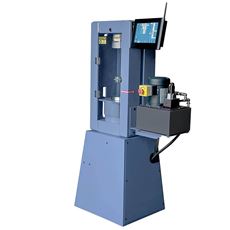
The mortar is cast into cube molds, compacted, cured under controlled conditions, and tested using a Compression Testing Machine (CTM). The maximum load applied before failure is divided by the specimen's cross-sectional area to calculate compressive strength.
Test Procedure
The cement strength test generally includes the following steps:
1. Material Preparation
- Cement sample
- Standard sand
- Clean water
2. Mixing
The materials are mixed mechanically according to the relevant testing standard to ensure uniform consistency.
3. Molding
Fresh mortar is placed into cube molds and compacted using vibration or jolting equipment.
4. Curing
Specimens are cured in a humidity chamber or water tank under controlled temperature and humidity conditions.
5. Compression Testing
After curing for the required age (typically 2, 7, and 28 days), specimens are tested using a calibrated Compression Testing Machine.
Common Testing Standards
The determination of cement strength is performed according to internationally recognized standards, including:
- ASTM C109/C109M
- ASTM C150
- EN 196-1
- ISO 679
- IS 4031 (Part 6)
- BS EN 196
Following these standards ensures consistency, repeatability, and global acceptance of test results.
Equipment Required
Typical laboratory equipment includes:
- Automatic Mortar Mixer
- Standard Sand
- Cube Molds
- Jolting Apparatus
- Vibration Table
- Humidity Cabinet
- Water Curing Tank
- Compression Testing Machine (CTM)
- Digital Load Indicator
- Laboratory Balance
- Measuring Equipment
High-quality testing equipment minimizes operator error and improves testing accuracy.
Factors Affecting Cement Strength
Several factors influence cement strength development, including:
- Cement composition
- Fineness of cement
- Water-cement ratio
- Mixing quality
- Curing conditions
- Testing age
- Environmental temperature
- Humidity
- Quality of standard sand
- Sample preparation
Proper control of these variables is essential for obtaining accurate and repeatable results.
Applications
Cement strength testing is widely used in:
- Cement manufacturing plants
- Construction companies
- Quality control laboratories
- Government testing organizations
- Universities and research institutes
- Infrastructure development projects
- Ready-mix concrete plants
- Building material testing laboratories
- Engineering consultants
Benefits of Accurate Cement Strength Testing
Reliable cement strength determination provides:
- Improved construction quality
- Increased structural safety
- Better quality assurance
- Compliance with project specifications
- Reduced material failure
- Lower maintenance costs
- Enhanced customer confidence
- International standard compliance
Why Choose QC LAB Solution Bangladesh?
QC LAB Solution is a trusted supplier of construction material testing equipment in Bangladesh. We provide reliable laboratory solutions for cement, concrete, aggregates, asphalt, soil, and steel testing.
Our advantages include:
- High-quality testing equipment
- International standard compliance
- Professional technical support
- Installation and commissioning
- Operator training
- Calibration assistance
- After-sales service
- Competitive pricing
- Fast delivery across Bangladesh
We are committed to helping laboratories and construction professionals maintain the highest standards of quality and accuracy.