
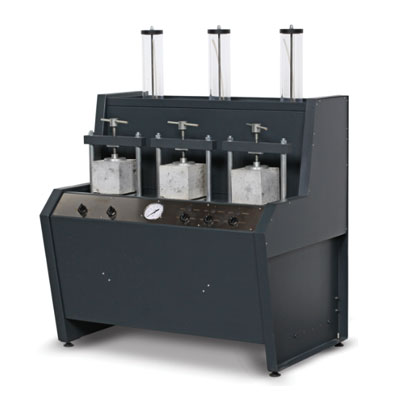
Water Penetration Test
Reliable Water Penetration Testing for Durable Concrete Structures
The Water Penetration Test is an important durability test used to determine the resistance of hardened concrete to water penetration under pressure. It evaluates the concrete's permeability and ability to prevent water ingress, making it a critical quality control procedure for structures exposed to moisture, groundwater, marine environments, or hydraulic pressure.
Low water penetration indicates dense, well-compacted, and durable concrete, while excessive penetration may suggest poor compaction, high porosity, or inadequate curing.
At QC LAB Solution Bangladesh, we provide high-performance Water Penetration Testing Equipment designed to deliver accurate, repeatable, and standards-compliant results for construction companies, laboratories, universities, consultants, and infrastructure projects across Bangladesh.
What is the Water Penetration Test?
The Water Penetration Test measures the depth to which water penetrates a hardened concrete specimen when subjected to a specified water pressure for a defined period.
After the test is completed, the specimen is split open, and the maximum depth of water penetration is measured. This result provides valuable information about the permeability and durability of the concrete.
The test is widely used to assess concrete intended for:
- Water-retaining structures
- Basements
- Bridges
- Tunnels
- Marine structures
- Dams
- Water treatment plants
- High-durability infrastructure
Importance of Water Penetration Testing
Water penetration testing helps to:
- Evaluate concrete permeability.
- Assess long-term durability.
- Verify concrete quality.
- Detect excessive porosity.
- Improve mix design optimization.
- Ensure compliance with project specifications.
- Support Quality Assurance (QA) and Quality Control (QC).
- Increase the service life of concrete structures.
Principle of the Test
A hardened concrete specimen is exposed to water under controlled hydraulic pressure for a specified duration. After the testing period, the specimen is split, and the maximum depth of water penetration is measured.
Lower penetration depth generally indicates:
- Higher density
- Lower permeability
- Better durability
- Improved resistance to aggressive environments
Equipment Required
A complete Water Penetration Test setup typically includes:
- Water Penetration Test Apparatus
- Pressure Chamber
- Hydraulic Pressure Pump
- Pressure Gauge
- Concrete Specimen Holder
- Water Supply System
- Specimen Splitting Device
- Measuring Scale or Vernier Caliper
- Laboratory Balance (if required)
- Data Recording System
Modern digital systems provide precise pressure control and reliable test performance.
Test Procedure
The Water Penetration Test generally includes the following steps:
1. Prepare the Specimen
Cast and cure the concrete specimen according to the applicable standard.
2. Install the Specimen
Place the specimen securely inside the water penetration test apparatus.
3. Apply Water Pressure
Apply the specified hydraulic pressure for the required testing duration.
4. Complete the Test
Release the pressure after the specified exposure period.
5. Split the Specimen
Split the specimen into two halves using an appropriate splitting method.
6. Measure Penetration Depth
Measure the maximum depth of visible water penetration using a calibrated measuring device.
7. Record the Results
Document the penetration depth, test conditions, specimen identification, and observations.
Common Testing Standards
The Water Penetration Test is commonly performed in accordance with internationally recognized standards, including:
- EN 12390-8 – Depth of Penetration of Water Under Pressure
- BS EN 12390-8
- DIN 1048 Part 5 – Testing Concrete for Water Penetration
- Project-specific specifications for watertight concrete
- National quality control standards where applicable
Compliance with these standards ensures reliable, repeatable, and internationally accepted testing results.
Applications
Water Penetration Testing is widely used in:
- Dams and reservoirs
- Water treatment plants
- Bridges and flyovers
- Tunnels
- Marine structures
- Basements
- Underground structures
- Hydroelectric projects
- High-rise buildings
- Infrastructure development
- Construction material testing laboratories
- Government quality control agencies
Benefits of Water Penetration Testing
Using the Water Penetration Test provides:
- Accurate evaluation of concrete permeability
- Improved durability assessment
- Better quality control
- Optimized concrete mix design
- Early identification of porous concrete
- Compliance with international standards
- Increased structural reliability
- Longer service life
Why Choose QC LAB Solution Bangladesh?
QC LAB Solution Bangladesh is a leading supplier of civil engineering and construction material testing equipment, providing complete laboratory solutions for concrete, cement, aggregates, asphalt, soil, rock, and geotechnical testing.
Our Advantages
- Premium-quality Water Penetration Testing Equipment
- Precision pressure control systems
- Compliance with EN, BS, DIN, and international standards
- Professional installation and commissioning
- Calibration and maintenance support
- Technical training
- Reliable after-sales service
- Competitive pricing
- Fast delivery throughout Bangladesh
- Expert laboratory consultation
We are committed to helping laboratories and construction professionals achieve accurate testing and superior quality control.
Conclusion
The Water Penetration Test is an essential durability assessment used to evaluate the permeability and watertightness of hardened concrete. By measuring the depth of water penetration under pressure, engineers can assess concrete quality, optimize mix designs, and ensure long-term structural durability.
With advanced Water Penetration Testing Equipment from QC LAB Solution Bangladesh, laboratories and construction professionals can perform precise, repeatable, and internationally compliant testing, supporting stronger, safer, and more durable concrete structures.
Frequently Asked Questions (FAQs)
1. What is the Water Penetration Test?
The Water Penetration Test measures the depth to which water penetrates hardened concrete under controlled pressure, helping evaluate its permeability and durability.
2. Why is the Water Penetration Test important?
It assesses concrete watertightness, identifies excessive porosity, improves durability evaluation, and supports quality assurance for structures exposed to water.
3. Which structures require this test?
The test is commonly performed for dams, bridges, tunnels, basements, reservoirs, marine structures, water treatment plants, and other water-retaining structures.
4. Which standards are commonly followed?
The most widely used standards include EN 12390-8, BS EN 12390-8, and DIN 1048 Part 5.
5. Why choose QC LAB Solution Bangladesh?
QC LAB Solution Bangladesh supplies premium Water Penetration Testing Equipment, technical support, calibration services, operator training, and dependable after-sales service for laboratories and construction projects across Bangladesh.