
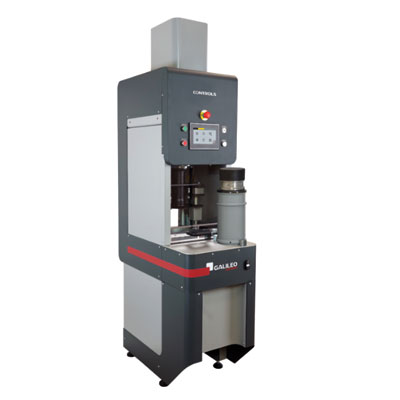
Gyratory Compactors for Cement and Concrete
Precision Compaction Technology for Cement and Concrete Research
Gyratory Compactors for Cement and Concrete are advanced laboratory machines designed to produce uniformly compacted cylindrical specimens under controlled pressure and gyratory motion. They simulate field compaction conditions while ensuring excellent repeatability, making them ideal for research laboratories, quality control testing, universities, construction material testing facilities, and infrastructure development projects.
These compactors help engineers evaluate the performance of cementitious materials and concrete mixes by preparing consistent specimens for strength, durability, permeability, and other laboratory tests.
At QC LAB Solution Bangladesh, we supply high-quality Gyratory Compactors engineered to deliver accurate, repeatable, and standards-compliant specimen preparation for modern construction laboratories across Bangladesh.
What is a Gyratory Compactor?
A Gyratory Compactor is a laboratory device that compacts a material sample by simultaneously applying vertical pressure and a controlled gyratory (rotational) motion. This process creates uniformly dense specimens with minimal variability, providing reliable samples for laboratory evaluation.
Compared to conventional compaction methods, gyratory compaction offers better control over specimen density and compaction energy, making it especially valuable for advanced material testing and mix optimization.
Importance of Gyratory Compaction
Gyratory Compactors play an important role by:
- Producing highly uniform test specimens.
- Simulating field compaction conditions.
- Improving repeatability of laboratory results.
- Supporting concrete and cement mix development.
- Enhancing quality assurance (QA) and quality control (QC).
- Reducing specimen variability.
- Supporting research and innovation in construction materials.
- Improving confidence in engineering test data.
Principle of Operation
The material sample is placed inside a cylindrical mould where it is subjected to a constant vertical load while the mould rotates at a small, controlled angle. The combined action of pressure and gyration compacts the material uniformly until the target density or number of gyrations is reached.
The machine continuously records compaction parameters, allowing engineers to monitor specimen density and compaction behavior throughout the test.
Key Features
High-quality Gyratory Compactors typically include:
- Precision-controlled vertical loading system
- Adjustable gyration angle
- Programmable compaction cycles
- Digital touchscreen control panel
- Automatic specimen height measurement
- Real-time density and compaction monitoring
- High-strength steel frame
- Heavy-duty hydraulic or electromechanical system
- Data logging and reporting capabilities
- Safety protection and emergency stop system
Typical Technical Specifications
Typical specifications may include:
- Compaction Load: Programmable (model dependent)
- Gyration Angle: Adjustable according to testing requirements
- Compaction Speed: Automatic and programmable
- Specimen Diameter: Various mould sizes available
- Control System: Digital touchscreen interface
- Data Storage: USB or PC connectivity
- Power Supply: 220–240 V, 50/60 Hz (model dependent)
Technical specifications may vary depending on the manufacturer and application.
Applications
Gyratory Compactors for Cement and Concrete are widely used in:
- Concrete research laboratories
- Cement manufacturing laboratories
- Universities and engineering institutions
- Government quality control laboratories
- Construction material testing laboratories
- Infrastructure development projects
- High-performance concrete research
- Precast concrete manufacturing
- Mix design optimization
- Research and development (R&D) facilities
Benefits of Using a Gyratory Compactor
Using a Gyratory Compactor provides:
- Consistent specimen density
- Excellent repeatability
- Improved laboratory accuracy
- Reliable mix design evaluation
- Reduced operator influence
- Faster specimen preparation
- Enhanced quality control
- Better correlation with field performance
- Increased testing efficiency
Common Standards
Depending on the testing application and project requirements, Gyratory Compactors may be used in accordance with internationally recognized laboratory procedures and specifications, including:
- ASTM standards for construction material testing
- AASHTO laboratory testing procedures
- EN standards for cement and concrete testing
- ISO quality management practices
- Project-specific and research laboratory protocols
The applicable standard depends on the material being tested and the intended engineering application.
Why Choose QC LAB Solution Bangladesh?
QC LAB Solution Bangladesh is a leading supplier of civil engineering and construction material testing equipment, providing complete laboratory solutions for cement, concrete, aggregates, asphalt, soil, rock, and geotechnical testing.
Our Advantages
- Premium-quality Gyratory Compactors
- Precision-engineered laboratory equipment
- International standard compliance
- Professional installation and commissioning
- Calibration and maintenance support
- Operator training
- Reliable after-sales service
- Competitive pricing
- Fast nationwide delivery across Bangladesh
- Expert technical consultation
Our goal is to help laboratories achieve accurate, repeatable, and internationally accepted testing results while improving efficiency and productivity.
Conclusion
Gyratory Compactors for Cement and Concrete provide an advanced and reliable solution for preparing uniformly compacted specimens for laboratory testing and research. Their ability to simulate field compaction conditions while delivering highly repeatable results makes them an essential tool for quality control, mix design, and material development.
With premium Gyratory Compactors from QC LAB Solution Bangladesh, laboratories and construction professionals can perform precise, efficient, and standards-compliant specimen preparation, supporting stronger, safer, and more durable concrete structures.
Frequently Asked Questions (FAQs)
1. What is a Gyratory Compactor?
A Gyratory Compactor is a laboratory machine that compacts cementitious or concrete materials using controlled vertical pressure and gyratory motion to produce uniform test specimens.
2. Why is a Gyratory Compactor used?
It is used to prepare consistent specimens for quality control, research, mix design optimization, and performance evaluation.
3. Which industries use Gyratory Compactors?
They are widely used in construction material testing laboratories, cement manufacturers, universities, government agencies, and research institutions.
4. What are the benefits of gyratory compaction?
It improves specimen consistency, reduces testing variability, enhances laboratory accuracy, and provides better simulation of field compaction.
5. Why choose QC LAB Solution Bangladesh?
QC LAB Solution Bangladesh offers high-quality Gyratory Compactors, expert technical support, calibration services, operator training, and dependable after-sales service for laboratories and construction projects throughout Bangladesh.