
Workability and Consistency of Fresh Concrete
Accurate Fresh Concrete Testing for Superior Construction Quality
Workability and Consistency of Fresh Concrete are among the most important properties evaluated before concrete is placed and compacted. These characteristics determine how easily fresh concrete can be mixed, transported, placed, compacted, and finished without segregation or excessive bleeding.
Proper workability ensures that concrete fills the formwork completely, surrounds reinforcement effectively, and achieves the required strength and durability after curing. Accurate testing of fresh concrete is therefore a critical part of quality assurance (QA) and quality control (QC) in construction projects.
At QC LAB Solution Bangladesh, we provide advanced fresh concrete testing equipment that complies with international standards, helping laboratories, contractors, consultants, universities, and government organizations achieve reliable and repeatable testing results.
What is Workability of Fresh Concrete?
Workability is the ease with which freshly mixed concrete can be handled, transported, placed, compacted, and finished while maintaining a uniform and stable mix.
A workable concrete mix should:
- Flow easily into formwork.
- Fully surround reinforcing steel.
- Require minimal effort for compaction.
- Resist segregation of aggregates.
- Minimize bleeding.
- Maintain uniform consistency throughout placement.
The required workability depends on the type of structure, placement method, reinforcement density, and construction conditions.
What is Consistency of Fresh Concrete?
Consistency refers to the degree of fluidity or mobility of fresh concrete. It indicates whether the concrete is stiff, plastic, or highly fluid.
Consistency is primarily influenced by:
- Water-cement ratio
- Aggregate grading
- Cement content
- Admixtures
- Temperature
- Mixing time
Although consistency and workability are closely related, they are not identical. Concrete with similar consistency may exhibit different workability depending on its composition and aggregate characteristics.
Importance of Workability and Consistency Testing
Testing the workability and consistency of fresh concrete helps to:
- Ensure proper concrete placement.
- Verify compliance with project specifications.
- Prevent segregation and bleeding.
- Improve concrete compaction.
- Enhance structural strength and durability.
- Support quality assurance (QA) and quality control (QC).
- Reduce construction defects and honeycombing.
- Optimize concrete mix design.
Common Tests for Fresh Concrete
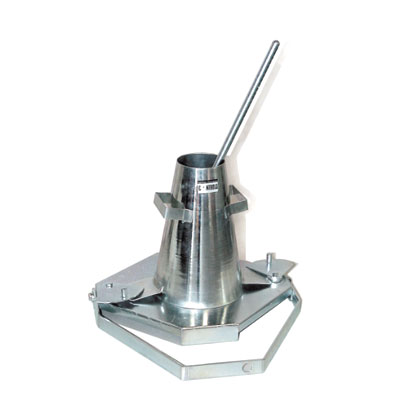
1. Slump Test
The Slump Test is the most commonly used method for measuring the consistency and workability of fresh concrete. It is suitable for normal workability concrete used in general construction.
Standard: ASTM C143, EN 12350-2
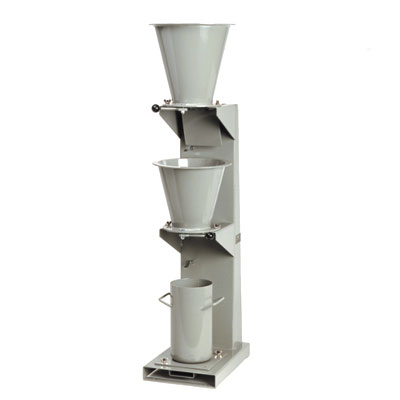
2. Compaction Factor Test
This test measures the degree of compaction achieved under standard conditions and is particularly suitable for low-workability concrete used in road construction and mass concrete works.
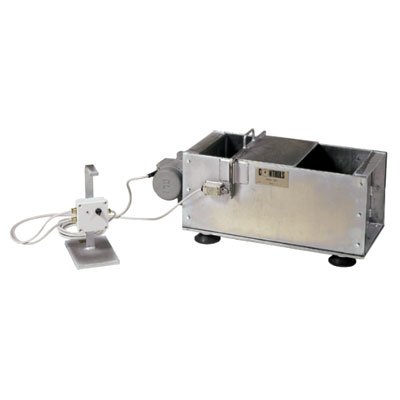
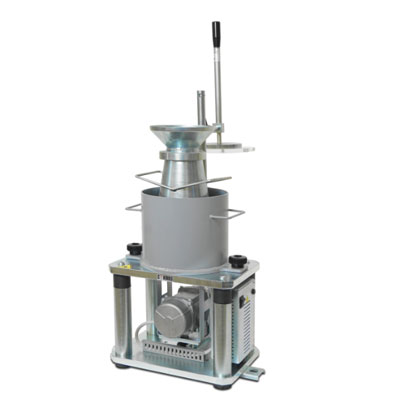
3. Vebe Consistency Test
The Vebe Test determines the time required for concrete to change from a conical shape to a cylindrical shape under vibration. It is ideal for stiff concrete mixes.
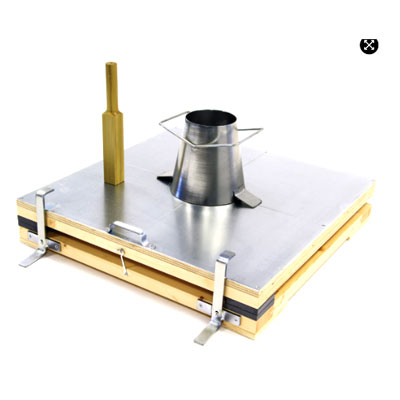
4. Flow Table Test
The Flow Table Test measures the flow characteristics of highly workable or self-compacting concrete by determining the spread diameter after controlled jolting.
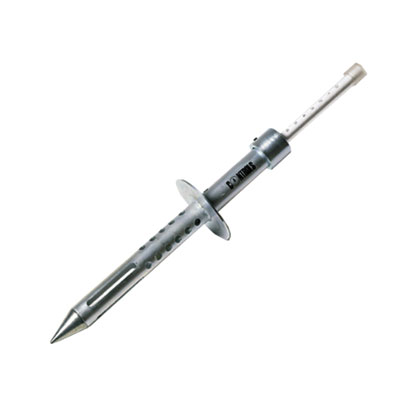
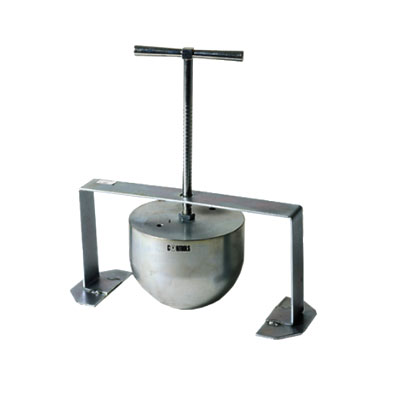
5. Kelly Ball Test
The Kelly Ball Test provides a quick field measurement of concrete consistency by measuring the penetration depth of a steel ball into fresh concrete.
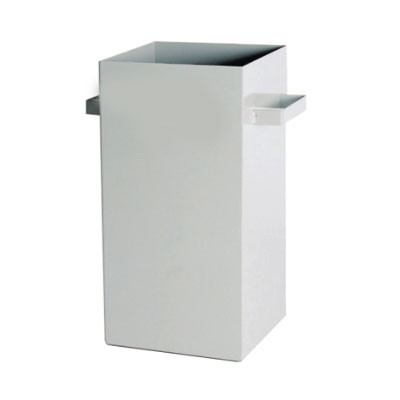
6. Air Content Test
Measures the percentage of entrained or entrapped air in fresh concrete, which significantly affects workability, durability, and freeze-thaw resistance.
7. Unit Weight and Yield Test
Determines the density, yield, and air content of freshly mixed concrete for quality control purposes.
Factors Affecting Workability
Several factors influence the workability of fresh concrete, including:
- Water-cement ratio
- Cement content
- Aggregate size and grading
- Aggregate shape and texture
- Fine aggregate proportion
- Chemical admixtures
- Mineral admixtures
- Mixing time
- Temperature
- Moisture content of aggregates
Proper control of these factors helps achieve consistent concrete performance.
Equipment Required
Typical fresh concrete testing equipment includes:
- Slump Cone Apparatus
- Compaction Factor Apparatus
- Vebe Consistometer
- Flow Table
- Kelly Ball Apparatus
- Air Content Meter
- Concrete Thermometer
- Unit Weight Measure
- Tamping Rod
- Laboratory Balance
- Measuring Scale
Modern testing equipment ensures accurate, reliable, and repeatable measurements.
Common Testing Standards
Fresh concrete workability and consistency testing is performed according to internationally recognized standards, including:
- ASTM C143 – Slump of Hydraulic Cement Concrete
- ASTM C231 – Air Content by Pressure Method
- ASTM C138 – Density (Unit Weight), Yield, and Air Content
- ASTM C173 – Air Content by Volumetric Method
- EN 12350 Series – Testing Fresh Concrete
- BS EN 12350
- IS 1199 – Methods of Sampling and Analysis of Concrete
- ACI Guidelines – Fresh Concrete Testing
These standards ensure consistent, accurate, and internationally accepted test results.
Applications
Workability and consistency testing is widely used in:
- Construction companies
- Ready-mix concrete plants
- Infrastructure projects
- Highway construction
- Bridge construction
- High-rise buildings
- Industrial construction
- Government quality control laboratories
- Universities and research institutes
- Concrete batching plants
Benefits of Fresh Concrete Testing
- Ensures proper concrete placement
- Improves construction quality
- Enhances structural durability
- Reduces segregation and bleeding
- Optimizes mix design
- Supports compliance with international standards
- Improves quality assurance and quality control
- Minimizes construction defects and rework
Why Choose QC LAB Solution Bangladesh?
QC LAB Solution Bangladesh is a trusted supplier of construction material testing equipment, providing complete laboratory solutions for fresh concrete, hardened concrete, cement, aggregates, soil, asphalt, and geotechnical testing.
Our Advantages
- High-quality fresh concrete testing equipment
- ASTM, EN, ISO, and IS compliant solutions
- Professional installation and commissioning
- Calibration and maintenance support
- Technical training
- Reliable after-sales service
- Competitive pricing
- Fast delivery across Bangladesh
- Expert technical consultation
We are committed to delivering reliable laboratory solutions that help engineers and construction professionals maintain the highest quality standards.