
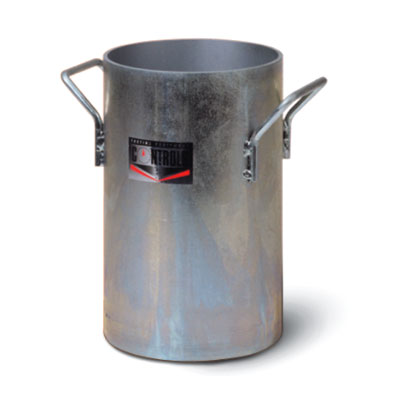
Density of Fresh Concrete
Accurate Density Testing for Consistent and High-Quality Concrete
The Density of Fresh Concrete Test, also known as the Unit Weight Test, is a fundamental quality control procedure used to determine the mass per unit volume of freshly mixed concrete. This test plays a crucial role in verifying the uniformity of the concrete mix, calculating yield, estimating air content, and ensuring compliance with design specifications before concrete placement.
Measuring the density of fresh concrete helps engineers identify variations in batching, mixing, and material proportions that could affect the strength, durability, and performance of the finished structure.
At QC LAB Solution Bangladesh, we provide advanced fresh concrete density testing equipment designed to deliver accurate, repeatable, and standards-compliant results for construction companies, ready-mix plants, testing laboratories, universities, consultants, and government organizations.
What is the Density of Fresh Concrete Test?
The Density of Fresh Concrete Test measures the weight of freshly mixed concrete occupying a known volume. The result is expressed as kg/m³, lb/ft³, or other standard units.
The measured density helps determine:
- Unit weight of fresh concrete
- Concrete yield
- Air content (when combined with theoretical density calculations)
- Uniformity of the concrete mix
- Compliance with mix design requirements
A consistent density indicates proper batching and mixing, while significant deviations may indicate issues such as incorrect material proportions, excessive air content, or segregation.
Importance of Fresh Concrete Density Testing
Fresh concrete density testing is essential because it:
- Verifies concrete mix consistency.
- Confirms compliance with project specifications.
- Detects batching and mixing errors.
- Assists in calculating concrete yield.
- Helps estimate air content.
- Supports quality assurance (QA) and quality control (QC).
- Improves structural performance and durability.
- Reduces the risk of construction defects.
Principle of the Test
A container of known volume is filled with freshly mixed concrete, compacted according to the specified method, and weighed. The density is calculated by dividing the net weight of the concrete by the calibrated volume of the container.
Density (Unit Weight) = Net Weight of Concrete ÷ Volume of Container
The test provides valuable information about the quality and uniformity of the concrete before placement.
Equipment Required
A complete Density of Fresh Concrete test setup typically includes:
- Unit Weight Measure (Calibrated Container)
- Strike-Off Plate
- Tamping Rod
- Internal or External Vibrator (if required)
- Laboratory Balance
- Scoop
- Trowel
- Rubber Mallet
- Cleaning Tools
Using calibrated equipment ensures reliable and repeatable measurements.
Test Procedure
The Density of Fresh Concrete Test generally involves the following steps:
1. Prepare the Equipment
Clean and weigh the calibrated density measure.
2. Fill the Container
Place fresh concrete into the container in layers, compacting each layer using the appropriate method (rodding or vibration).
3. Strike Off the Surface
Remove excess concrete and level the surface with a strike-off plate.
4. Weigh the Filled Container
Determine the total weight of the container filled with concrete.
5. Calculate the Density
Subtract the empty container weight to obtain the net concrete weight, then divide by the known volume of the container to calculate the density.
6. Record the Results
Report the density along with the test conditions, specimen identification, and any observations.
Common Testing Standards
The Density of Fresh Concrete Test is performed according to internationally recognized standards, including:
- ASTM C138/C138M – Density (Unit Weight), Yield, and Air Content of Concrete
- EN 12350-6 – Testing Fresh Concrete: Density
- BS EN 12350-6
- IS 1199 – Methods of Sampling and Analysis of Concrete
- Project-specific quality control specifications
Compliance with these standards ensures accurate, consistent, and internationally accepted test results.
Applications
Fresh concrete density testing is widely used in:
- Ready-mix concrete plants
- Construction sites
- Civil engineering laboratories
- Infrastructure projects
- Highway and bridge construction
- High-rise buildings
- Precast concrete manufacturing
- Government quality control agencies
- Universities and research institutions
- Industrial construction projects
Benefits of Density Testing
Using the Density of Fresh Concrete Test provides:
- Accurate concrete quality assessment
- Verification of mix uniformity
- Reliable yield calculations
- Improved quality assurance
- Enhanced structural performance
- Compliance with international standards
- Reduced material wastage
- Increased confidence in construction quality
Why Choose QC LAB Solution Bangladesh?
QC LAB Solution Bangladesh is a leading supplier of construction material testing equipment and laboratory solutions. We provide advanced equipment for testing fresh concrete, hardened concrete, cement, aggregates, soil, asphalt, steel, and geotechnical materials.
Our Advantages
- Premium-quality fresh concrete density testing equipment
- ASTM, EN, ISO, and IS compliant solutions
- Professional installation and commissioning
- Calibration and maintenance support
- Technical training
- Reliable after-sales service
- Competitive pricing
- Fast delivery across Bangladesh
- Expert engineering consultation
Our commitment is to provide dependable laboratory solutions that support accurate testing and superior construction quality.