
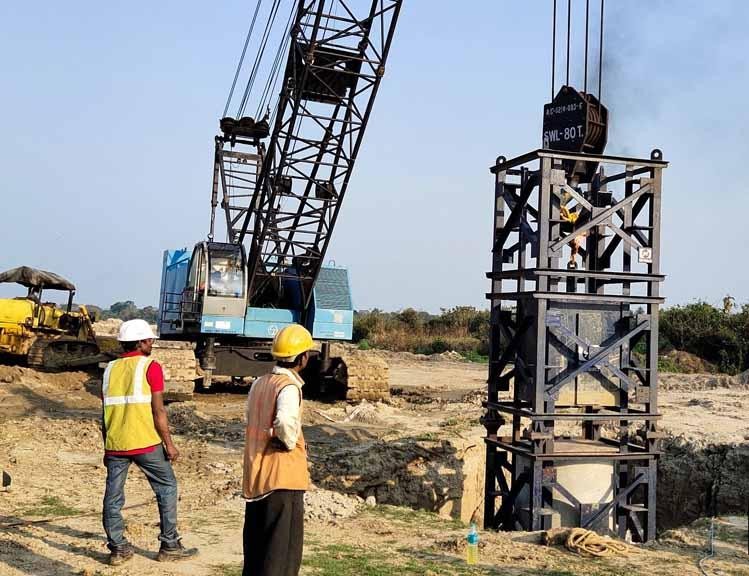
Enhancing Infrastructure Quality: Pile Load Testing Solutions by QC LAB SOLUTION. in Bangladesh
Introduction to Pile Load Testing:
Pile load testing is a fundamental procedure in Geotechnical Engineering used to evaluate the load-carrying capacity and structural integrity of deep foundations, such as piles and drilled shafts. In densely populated countries like Bangladesh, where infrastructure development is rapidly expanding, ensuring the reliability and safety of foundations is paramount. Piles are essential for supporting structures like high-rise buildings, bridges, and industrial facilities, where they transfer loads from the superstructure to deeper, more stable soil or rock layers. The primary goal of pile load testing is to validate design assumptions, construction quality, and ultimately ensure the safety and performance of the foundation under various load conditions.

Globally in Infrastructure development pile load testing initiative aims to comprehensively assess the load-bearing capacity of piles across diverse geographic regions and soil conditions. With an approximate annual budget ranging from several million to tens of millions of dollars, this initiative involves conducting static and dynamic load tests in various environments, from coastal to urban settings. Future scopes include integrating advanced sensor technologies for more precise testing, developing predictive models to forecast pile performance under different environmental conditions, and influencing global standards for pile design. This initiative not only enhances construction reliability but also contributes to the evolution of engineering practices on a global scale.
Infrastructure development in Bangladesh is crucial for its economic and societal progress. The country is focused on improving connectivity and modernizing key services like transportation, water resources, urban development, and digital infrastructure. With significant government funding, international aid, and private sector partnerships, Bangladesh aims to drive economic growth, raise living standards, and ensure sustainable development. These efforts enhance resilience and global competitiveness.
Pile testing is crucial for ensuring stability, safety, and efficiency in Bangladesh's infrastructure. It assesses pile load-bearing capacity for bridges, buildings, and other projects, under varied soil conditions like riverine, coastal, and urban environments. This data optimizes designs, ensures structural integrity, and mitigates risks, supporting resilient, sustainable infrastructure networks and Bangladesh's development goals effectively. In Bangladesh main user of this survey are LGED, RHD, BBA, DMTCL, DNCC, DSCC, WASA, City Corporation, RAJUK, DPHE, CAAB, PWD, Bangladesh Railway Department, DESCO, NESCO, EGCB, PGCB, BPDB and other private industry like construction company, Real state company, consultancy firm, ETP contractor etc.
QC LAB SOLUTION. in Bangladesh plays a pivotal role in pile testing by ensuring the integrity and safety of critical infrastructure projects across the country. Specializing in comprehensive pile testing services, QC LAB SOLUTION. employs state-of technologies and methodologies to assess the load-bearing capacity and performance of piles under diverse soil conditions. By delivering accurate and reliable data, QC LAB SOLUTION contributes to optimizing foundation designs, enhancing construction efficiency, and minimizing risks associated with structural failures. Moreover, by adhering to global standards and leveraging advanced technologies, QC LAB SOLUTION bridges the technology gap in pile testing practices in Bangladesh.
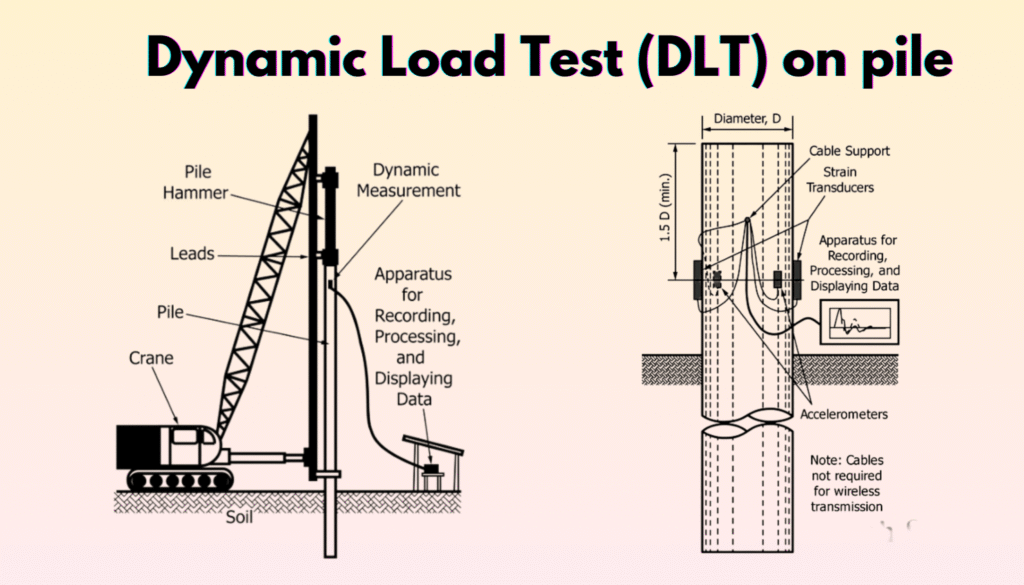
Types of Pile Load Tests:
- Pile Load Test instrumentation using strain gauges
- Crosshole Sonic Logging Test (CSL)
- Sonic Borehole Measurement Test (SBMT)
- Plate Load Test (PLT)
- Pile Integrity Test (PIT)
- High-Strain Dynamic Testing (HSDT)
- Rapid Load Testing and
- Static Load Testing: (Compression test, Tension Test and Lateral Load test)