
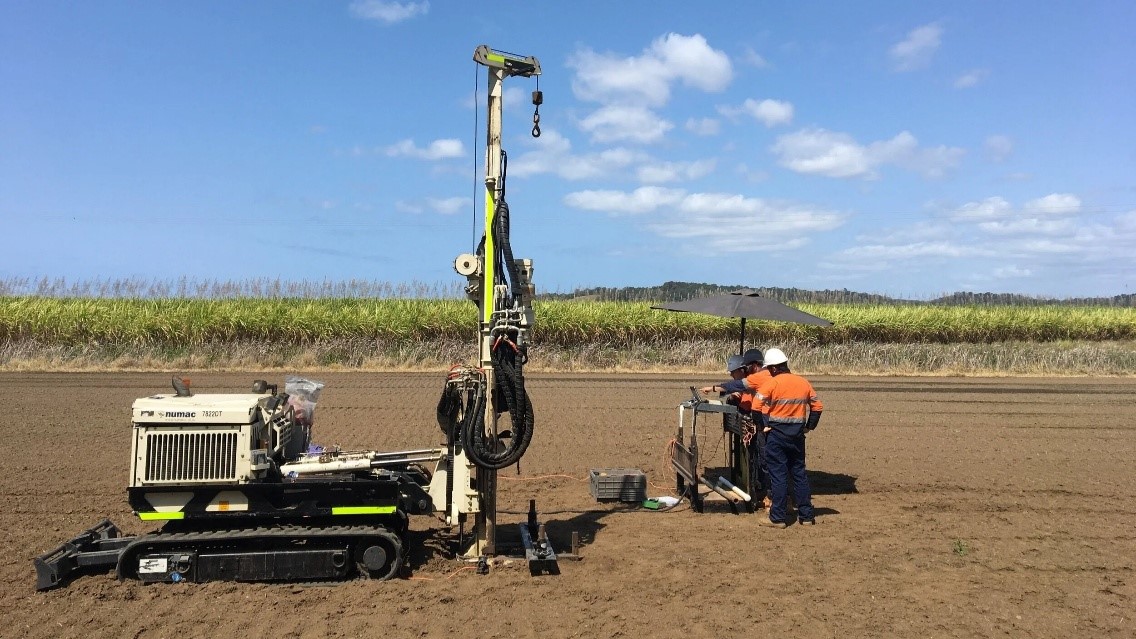
Cone Penetration Test (CPT) in Bangladesh
The Cone Penetration Test (CPT) is one of the most effective in-situ geotechnical investigation techniques used to obtain continuous information about subsurface soil conditions.
Before designing a building, bridge, industrial facility, road, embankment, power plant, or other major civil engineering structure, engineers need reliable information about the ground beneath the proposed construction site. Understanding the subsurface soil profile is essential for selecting an appropriate foundation system, estimating bearing capacity and settlement, assessing liquefaction potential, and determining how the ground will behave under structural loading.
Unlike conventional exploratory drilling, where soil samples are collected at discrete intervals, CPT continuously measures soil resistance as a cone-shaped penetrometer is pushed into the ground at a controlled rate. The resulting data can provide a detailed profile of soil behavior with depth.

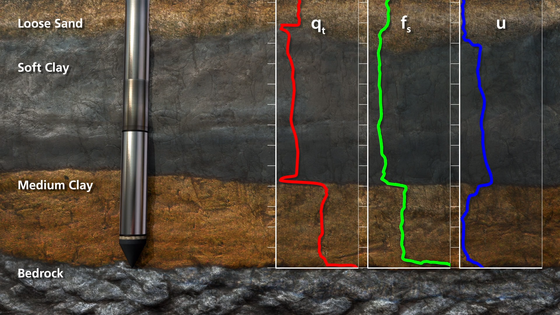
The modern electronic CPT system generally measures cone tip resistance (qc) and sleeve friction (fs). When a pore-pressure sensor is incorporated, the test becomes a Piezocone Penetration Test (CPTu or CPTU), which additionally measures pore-water pressure.
ASTM D5778-20 covers electronic friction-cone and piezocone penetration testing and states that CPT data can be used to evaluate site stratigraphy, engineering properties, soil homogeneity, depth to firm layers, voids and other discontinuities, and to support foundation and earthwork design.
The international standard ISO 22476-1:2022 specifies equipment, procedures and reporting requirements for electrical cone and piezocone penetration tests and covers onshore and nearshore CPT.
For QC LAB SOLUTION, Cone Penetration Testing is an important geotechnical investigation service for projects requiring reliable and continuous subsurface information.

What Is a Cone Penetration Test?
The Cone Penetration Test, commonly abbreviated as CPT, is an in-situ soil investigation technique in which a standardized cone penetrometer is pushed vertically into the ground at a controlled and generally constant penetration rate.
As the cone moves through different soil layers, sensors continuously measure the resistance developed by the soil.
The primary measurements are:
- Cone tip resistance (qc)
- Sleeve friction (fs)
In CPTU, the system additionally measures:
- Pore-water pressure (u)
Other sensors may also be incorporated into advanced CPT systems, including:
- Seismic sensors
- Inclinometers
- Electrical conductivity/resistivity sensors
- Temperature sensors
- Other specialized sensors
ASTM D5778 notes that additional sensors such as inclinometer, seismic, resistivity, electrical conductivity and temperature sensors can be incorporated into suitable penetrometers.
The resulting measurements are generally recorded continuously with depth, creating a detailed geotechnical profile.
Why Is CPT Important in Geotechnical Investigation?
A foundation interacts directly with the ground. Therefore, understanding the engineering behavior of the soil is fundamental to safe and economical structural design.
Poor understanding of subsurface conditions can result in:
- Excessive settlement
- Differential settlement
- Foundation failure
- Lateral ground movement
- Structural cracking
- Construction delays
- Unnecessary foundation costs
- Remedial construction
- Ground improvement requirements
CPT provides continuous in-situ information that can help engineers identify changes in soil behavior more clearly than widely spaced investigation points alone.
ASTM identifies CPT as a rapid means of determining subsurface conditions and states that the data can support estimation of engineering properties for earthworks and foundation design.
Market Growth and Industry Trends for CPT in Bangladesh
Bangladesh continues to experience significant development of:
- Residential buildings
- High-rise structures
- Industrial facilities
- Economic zones
- Roads
- Bridges
- Flyovers
- Ports
- Power infrastructure
- Commercial developments
- Urban infrastructure
As construction projects become larger and more technically demanding, reliable geotechnical characterization becomes increasingly important.
Growth of High-Rise Construction
High-rise buildings impose substantial loads on foundations.
Understanding the variation of soil stiffness, strength and stratigraphy with depth becomes critical when selecting:
- Raft foundations
- Pile foundations
- Combined raft-pile systems
- Other deep foundation solutions
CPT can provide continuous information that helps geotechnical engineers evaluate these conditions.
Infrastructure Development
Roads, bridges, embankments and transportation infrastructure can involve large areas with variable soil conditions.
CPT can efficiently investigate changes in subsurface soil behavior along project corridors.
Industrial Development
Factories and industrial facilities may contain heavy equipment, storage tanks, warehouses and other heavily loaded structures.
Accurate ground characterization is important for controlling settlement and foundation performance.
Increasing Importance of Geotechnical Risk Management
Modern engineering projects increasingly focus on identifying ground-related risks before construction.
CPT can contribute to:
- Soil profiling
- Settlement assessment
- Liquefaction assessment
- Foundation analysis
- Ground improvement evaluation
- Site characterization
Main Measurements in CPT
Cone Tip Resistance (qc)
Cone tip resistance represents the resistance developed at the cone tip as it penetrates the soil.
It is one of the principal measurements obtained from CPT.
Variations in qc can indicate changes in soil behavior and stratigraphy.
Higher or lower values should not automatically be interpreted as a specific soil type without considering other
Sleeve Friction (fs)
The friction sleeve is located behind the cone tip.
As the cone moves through the soil, friction develops along the sleeve.
The measured sleeve friction provides additional information about soil behavior.
The combination of:
qc + fs
is considerably more informative than either parameter alone.
Friction Ratio (Rf)
The friction ratio is commonly calculated from cone resistance and sleeve friction.
A commonly used expression is:
Rf = (fs / qc) × 100
The friction ratio is useful in soil behavior classification and helps distinguish different soil response patterns.
Pore-Water Pressure in CPTU
When a piezocone is used, pore-water pressure is measured during penetration.
This is known as CPTU.
Pore pressure information can be particularly useful for evaluating:
- Fine-grained soils
- Drainage behavior
- Consolidation
- Soil classification
- Groundwater response
- Dissipation behavior
- Liquefaction-related assessments
ASTM D5778 specifically allows pore-water pressure measurement and dissipation testing using a properly saturated piezocone.
CPT and CPTU: What Is the Difference?
|
Parameter |
CPT |
CPTU |
|
Cone resistance |
Yes |
Yes |
|
Sleeve friction |
Yes |
Yes |
|
Pore pressure |
No |
Yes |
|
Soil behavior classification |
Yes |
Improved |
|
Consolidation assessment |
Limited |
Better |
|
Pore pressure dissipation |
No |
Yes |
|
Liquefaction assessment |
Possible |
More comprehensive |
ISO 22476-1 distinguishes electrical CPT, which measures cone resistance and sleeve friction, from CPTU, which adds pore-pressure measurement.
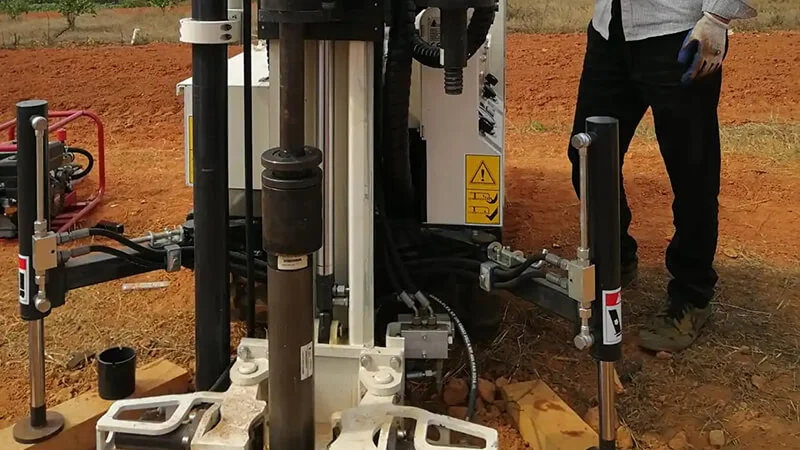
Key Techniques of Cone Penetration Testing
Electrical CPT
An electronic cone contains load cells that measure the forces acting on the cone and friction sleeve. The data are transmitted to a surface data acquisition system.
Piezocone CPTU
CPTU adds a pore-pressure element to the cone. The pore-pressure response provides additional information about soil behavior.
Seismic CPT
A seismic module can be incorporated into a CPT system.
The seismic cone can be used to obtain information such as:
- Shear-wave velocity
- Compressional-wave velocity
- Dynamic soil properties
This makes seismic CPT particularly useful for advanced geotechnical and seismic site characterization.
Dissipation Testing
After the cone is temporarily stopped at a selected depth, pore pressure can be monitored as it dissipates.
This can provide information useful for evaluating:
- Consolidation characteristics
- Drainage behavior
- Permeability-related parameters
- Time-dependent response
ASTM D5778 identifies pore-pressure dissipation as an application of piezocone testing.
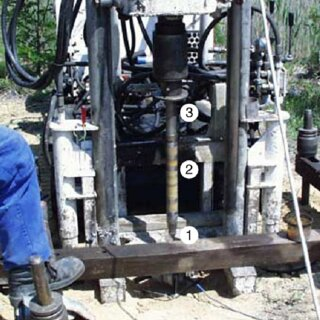
Equipment Used for CPT
A professional CPT system generally consists of several major components.
CPT Rig or Reaction System
The rig provides the reaction force required to push the cone into the ground.
Depending on project requirements, CPT systems can be:
- Truck-mounted
- Crawler-mounted
- Trailer-mounted
- Modular
- Specialized offshore/nearshore systems
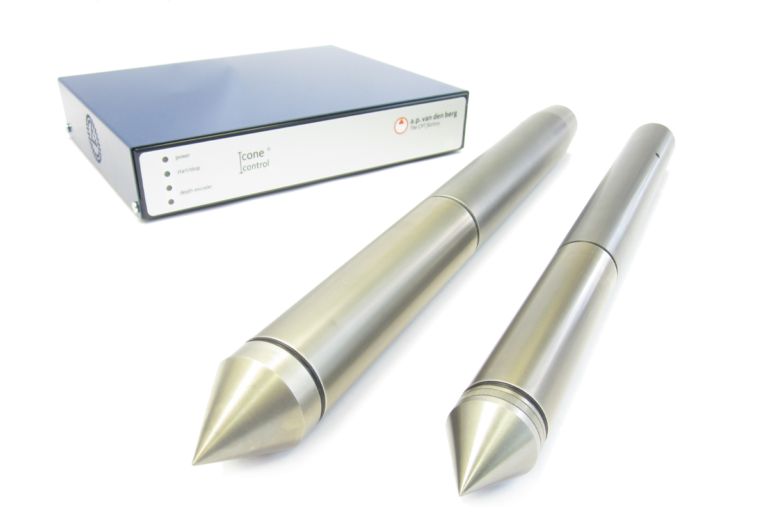
CPT Cone
The cone contains sensors that measure the resistance generated during penetration.
A typical electronic cone measures:
- Tip resistance
- Sleeve friction
A piezocone additionally measures pore pressure.
CPT Rods
Specialized rods transmit the pushing force from the rig to the cone. Electrical cables may run through the rods to transfer data.
Hydraulic Pushing System
Hydraulic equipment applies controlled penetration force to advance the cone.
Data Acquisition System
The system continuously records measurements from the cone.
Typical recorded parameters include:
- Depth
- qc
- fs
- u
- Inclination
- Time
Reaction Anchors
The reaction system must provide sufficient resistance to push the cone to the required depth.
Anchoring can be particularly important where high cone resistance is expected.
Test Working Procedure for CPT
Step 1: Review Project Requirements
Before starting the field investigation, the testing team reviews:
- Project location
- Proposed structure
- Required investigation depth
- Number of CPT locations
- Expected soil conditions
- Groundwater conditions
- Required standards
- Reporting requirements
Step 2: Review Existing Information
Available information may include:
- Geological maps
- Previous borehole logs
- Existing SPT results
- Site plans
- Foundation drawings
- Previous geotechnical reports
- Groundwater information
This helps determine appropriate CPT locations and depths.
Step 3: Site Reconnaissance
The field team visits the site to evaluate:
- Access
- Terrain
- Existing structures
- Overhead utilities
- Underground services
- Ground conditions
- Working space
- Safety requirements
Step 4: Set Up the CPT Rig
The CPT equipment is positioned over the selected test location. The rig should be properly stabilized. The cone penetration axis should be aligned as closely as practical with the intended vertical test direction.
Step 5: Verify Equipment
Before penetration begins, the equipment and sensors should be checked.
This can include:
- Cone inspection
- Sensor verification
- Data acquisition check
- Cable inspection
- Zero readings
- Pore-pressure saturation verification for CPTU
- Rig hydraulic system inspection
Step 6: Establish the Test Datum
The ground elevation and test location should be properly documented. ISO 22476-1 includes requirements related to penetration depth, ground-surface elevation and reproducible location referencing.
Step 7: Position the Cone
The cone is positioned at the ground surface or at the appropriate starting level.
Step 8: Begin Penetration
The hydraulic system pushes the cone into the ground at a controlled rate. The cone should advance continuously where practical.
Step 9: Continuously Record Measurements
As the cone penetrates, the data acquisition system records:
- Cone resistance
- Sleeve friction
- Pore pressure where applicable
- Depth
- Inclination
- Other installed sensor measurements
This creates a continuous profile of the subsurface.
Step 10: Monitor Penetration
The operator monitors the equipment and recorded data throughout the sounding.
Sudden changes in resistance may indicate:
- Soil layer changes
- Very dense soil
- Hard strata
- Gravel
- Obstructions
- Possible equipment problems
Step 11: Perform Dissipation Test Where Required
For CPTU investigations, the cone can be stopped at selected depths to monitor pore-pressure dissipation.
The duration and test locations depend on project objectives.
Step 12: Continue to Target Depth
Testing continues until:
- Required depth is reached
- Maximum equipment capacity is reached
- Refusal occurs
- A predefined termination criterion is reached
- Site conditions prevent further penetration
Step 13: Extract the Cone
After the test is completed, the CPT rods and cone are withdrawn.
The cone should be inspected for damage or contamination.
Step 14: Process the Data
The raw measurements are processed to develop:
- qc profiles
- fs profiles
- Pore-pressure profiles
- Friction ratio
- Soil behavior classification
Derived engineering parameters

Step 15: Prepare the CPT Report
The final report should clearly document:
- Project information
- Test location
- Equipment
- Cone identification
- Test standard
- Test depth
- Raw data
- Derived parameters
- Soil behavior interpretation
- Graphical profiles
- Limitations
- Engineering recommendations where within scope

Working Steps on Field
A typical CPT field operation can be summarized as:
Site Reconnaissance
↓
Review Investigation Plan
↓
Mark CPT Location
↓
Position CPT Rig
↓
Stabilize and Level Equipment
↓
Verify Cone and Data Acquisition System
↓
Zero Sensors
↓
Saturate Pore-Pressure Filter for CPTU
↓
Position Cone
↓
Start Controlled Penetration
↓
Continuously Record qc and fs
↓
Record Pore Pressure for CPTU
↓
Monitor Inclination and Equipment Response
↓
Perform Dissipation Tests Where Required
↓
Continue to Required Depth
↓
Withdraw Cone
↓
Check Equipment
↓
Process Data
↓
Classify Soil Behavior
↓
Prepare Geotechnical CPT Report

Soil Classification Using CPT Data
One of the most important applications of CPT is estimating soil behavior type from the measured parameters. CPT does not physically collect a soil sample. Instead, soil behavior is inferred from the response of the soil to cone penetration. This is an important distinction.
ASTM D5778 states that interpretation of CPT results provides estimates of the types of soil penetrated, while soil samples may be obtained from parallel borings for correlation purposes.
CPT interpretation can help identify zones broadly behaving like:
- Clay
- Silty clay
- Silt
- Sandy silt
- Silty sand
- Sand
- Dense sand
- Transitional materials
The exact classification methodology should be selected according to the applicable project methodology and engineering practice.
CPT for Foundation Design
CPT data can be used as an input to foundation engineering.
Potential applications include assessment of:
- Shallow foundation behavior
- Deep foundation behavior
- Pile capacity
- Settlement
- Soil stiffness
- Bearing resistance
- Soil stratigraphy
CPT can be particularly useful for pile design because the cone directly measures penetration resistance continuously with depth.
However, the design correlation and methodology should be selected by the responsible geotechnical engineer based on the applicable design code and project conditions.
CPT for Pile Foundation Investigation
Pile foundations are widely used in areas where near-surface soils cannot safely support structural loads.
CPT can provide a continuous soil resistance profile along the proposed pile depth.
This can help engineers assess:
- Suitable founding levels
- Potential pile-bearing strata
- Shaft resistance
- End-bearing behavior
- Soil layering
- Variations between pile locations
For major projects, CPT is often particularly valuable when used alongside boreholes and laboratory testing.
CPT for Settlement Assessment
Settlement is one of the most important geotechnical design considerations.
A structure can experience:
- Immediate settlement
- Consolidation settlement
- Secondary settlement
- Differential settlement
CPT data can provide information useful for estimating soil stiffness and compressibility through appropriate correlations.
This is particularly important in soft and compressible deposits.
CPT for Soft Soil Investigation
Bangladesh contains extensive areas where soft and compressible soils can create significant foundation and settlement challenges.
CPT/CPTU can be particularly useful for identifying:
- Soft clay
- Silty clay
- Compressible layers
- Interbedded deposits
- Stronger underlying strata
CPTU pore-pressure dissipation testing can provide additional information about the response of saturated fine-grained soils.
CPT for Liquefaction Assessment
Liquefaction is a major geotechnical concern in earthquake-prone areas. Loose saturated granular soils may lose a substantial portion of their effective stress during strong earthquake shaking. CPT data can be used in established liquefaction assessment methodologies. Parameters such as normalized cone resistance can be incorporated into empirical screening procedures. Where seismic risk is important, CPTU may provide particularly useful information because it combines penetration resistance with pore-pressure measurements.
For critical projects, liquefaction assessment should be performed by a qualified geotechnical engineer using the applicable current methodology and project-specific seismic parameters.
CPT for Ground Improvement Verification
CPT can also be useful for evaluating ground improvement.
Before improvement:
CPT → Establish Initial Soil Condition
After improvement:
CPT → Evaluate Change in Soil Response
Depending on the improvement method, CPT can help assess changes in:
- Soil resistance
- Layer continuity
- Relative density
- Strength-related parameters
- Ground improvement uniformity
Potential applications include:
- Vibro-compaction
- Stone columns
- Dynamic compaction
- Deep mixing
- Preloading
- Other ground improvement techniques
CPT for Road and Pavement Projects
CPT can contribute to investigation of:
- Subgrade conditions
- Embankment foundations
- Soft soil zones
- Settlement risk
- Variable soil profiles
However, pavement projects may also require dedicated laboratory and in-situ testing such as:
- CBR
- Plate load testing
- DCP
- Grain-size analysis
- Atterberg limits
- Compaction testing
CPT should therefore be considered as one component of a broader geotechnical investigation where appropriate.
CPT for Bridge and Infrastructure Projects
Bridges require careful characterization of foundation conditions.
CPT can be used around:
- Abutments
- Piers
- Approach embankments
- Foundation zones
Continuous CPT profiles can help identify changes in subsurface resistance and potential foundation-bearing strata.
For major bridges, CPT can be integrated with:
- Boreholes
- SPT
- Laboratory soil testing
- Geophysical surveys
- Seismic testing
- Groundwater investigation
CPT vs SPT
CPT and SPT are both important geotechnical investigation methods, but they work differently.
|
Feature |
CPT |
SPT |
|
Soil sampling |
No |
Yes, disturbed sample |
|
Continuous data |
Yes |
No |
|
Tip resistance |
Yes |
No |
|
Sleeve friction |
Yes |
No |
|
Pore pressure |
CPTU: Yes |
No |
|
Test speed |
Generally rapid |
Generally slower |
|
Soil classification |
Indirect |
Sample-based |
|
Laboratory testing |
Requires separate sampling |
Possible from recovered sample |
|
Dense gravel/cobbles |
Can be difficult |
Often more practical |
|
Soft/medium soils |
Excellent application |
Widely applicable |
|
Foundation design |
Yes |
Yes |
The two methods should not necessarily be considered competitors.
A strong geotechnical investigation may use:
Borehole + SPT + CPT/CPTU + Laboratory Testing
to obtain complementary information.
Advantages of Cone Penetration Testing
Continuous Soil Profile
One of CPT's biggest advantages is the ability to obtain nearly continuous measurements with depth.
Rapid Field Investigation
CPT can provide large amounts of data relatively quickly.
High-Resolution Data
Small changes in soil behavior can be identified through the continuous profile.
Digital Data
Measurements are collected electronically and can be processed efficiently.
Minimal Soil Disturbance
The test does not require continuous drilling and removal of soil samples.
Repeatable Measurements
Controlled penetration and electronic measurement can improve repeatability when equipment and procedures are properly maintained.
CPT is particularly effective in many soft to medium soil deposits.
Foundation Design Support
CPT data can be used with appropriate correlations for foundation and geotechnical analysis.
CPTU Adds Pore Pressure
Piezocone testing provides additional information beyond conventional CPT.
Quality Assurance and Quality Control for CPT
Reliable CPT results depend heavily on equipment condition, calibration, field procedure and data quality.
ASTM D5778 emphasizes that the quality of results depends on the competence of personnel and suitability of equipment and facilities.
Cone Calibration
The cone sensors should be appropriately calibrated and maintained.
Zero Checks
Sensor readings should be checked before penetration.
Cone Inspection
The cone should be inspected for:
- Damage
- Wear
- Contamination
- Cable problems
- Sensor abnormalities
Pore-Pressure Saturation
For CPTU, proper saturation of the pore-pressure element is critical.
Rig Verticality
The rig and cone should be appropriately aligned.
Penetration Rate
The penetration rate should be controlled according to the applicable standard.
Data Acquisition
The data logging system should continuously record measurements without unexplained gaps.
Inclination Monitoring
Inclination measurements can help identify deviations from the intended penetration path.
ASTM specifically notes that an inclinometer is highly recommended because it can provide information about potentially damaging conditions during sounding.
Location Control
Each CPT location should be referenced to a clear site coordinate or reproducible fixed reference.
Depth Verification
Depth records should be checked for consistency.
Data Validation
Abnormal readings should be reviewed to determine whether they represent:
- Actual soil changes
- Equipment problems
- Penetration interruptions
- Obstructions
- Sensor anomalies
Site and Health Safety During CPT
CPT operations involve heavy equipment and high hydraulic forces. Therefore, proper safety procedures are essential.
Important safety considerations include:
Personal Protective Equipment
Field personnel should use appropriate:
- Safety helmets
- Safety shoes
- Gloves
- High-visibility clothing
- Eye protection
- Other site-required PPE
Hydraulic Safety
Hydraulic systems operate under high pressure.
Personnel should never attempt to repair pressurized hydraulic components.
Underground Utilities
Before testing, the location should be checked for:
- Electrical cables
- Gas lines
- Water pipelines
- Communication cables
- Other buried utilities
Overhead Hazards
The CPT rig should be operated safely around:
- Power lines
- Structures
- Cranes
- Other overhead obstructions
Rig Stability
The CPT rig should be positioned on suitable ground and stabilized appropriately.
Moving Equipment
Unauthorized personnel should be kept away from moving hydraulic components, rods and rig machinery.
Emergency Procedures
The site team should understand:
- Emergency shutdown
- First-aid arrangements
- Communication procedures
- Evacuation routes
ASTM D5778 explicitly states that the standard does not address all safety concerns and that users are responsible for establishing appropriate safety, health and environmental practices.
QC LAB SOLUTION's Contribution to CPT Services
QC LAB SOLUTION provides civil engineering and geotechnical testing services in Bangladesh for construction, infrastructure and engineering projects.
Our CPT service can be structured around the complete testing workflow.
Project Planning
We review the client's requirements and understand:
- Proposed structure
- Site conditions
- Required investigation depth
- Number of test points
- Required standards
- Required deliverables
Site Reconnaissance
Before testing, site conditions and access requirements are assessed.
CPT Location Planning
Test points are selected based on the project investigation plan.
Equipment Preparation
The CPT system, cone, rods, hydraulic system and data acquisition equipment are checked before field operation.
Field Testing
The cone is advanced through the ground while continuously recording the required parameters.
For CPTU projects, pore-water pressure is additionally measured.
Data Processing
The collected data can be processed to produce:
- Cone resistance profiles
- Sleeve friction profiles
- Pore-pressure profiles
- Friction ratios
- Soil behavior interpretations
- Relevant derived parameters
Engineering Interpretation
Where included within the project scope, CPT results can be interpreted for applications such as:
- Soil stratification
- Foundation assessment
- Bearing resistance
- Settlement-related parameters
- Liquefaction screening
- Ground improvement evaluation
Technical Reporting
The report can include:
- Site plan
- CPT locations
- Equipment details
- Test methodology
- Standards
- Raw data
- CPT plots
- Soil behavior interpretation
- Derived parameters
- Test limitations
- Recommendations for additional investigation where required
The objective of QC LAB SOLUTION is to provide traceable and technically useful geotechnical data that can support engineering decision-making.
CPT Data Reporting
A professional CPT report should not simply provide a table of numbers.
Typical graphical outputs can include:
Cone Resistance vs Depth
Shows how cone resistance changes through the soil profile.
Sleeve Friction vs Depth
Shows frictional response along the cone sleeve.
Pore Pressure vs Depth
Applicable to CPTU.
Friction Ratio vs Depth
Provides additional information for soil behavior interpretation.
Soil Behavior Type Profile
Provides an interpreted indication of soil behavior changes with depth.
Test Summary
The report should identify:
-
<
li>Test point
- Coordinates
- Ground elevation
- Maximum depth
- Termination reason
- Equipment
- Cone identification
- Testing date
The Cone Penetration Test (CPT) is a powerful and efficient geotechnical investigation technique for understanding subsurface soil behavior.
By continuously measuring parameters such as cone tip resistance, sleeve friction and, in CPTU, pore-water pressure, CPT can provide a high-resolution profile of subsurface conditions. The principal advantages of CPT include continuous data, rapid investigation, high-resolution measurements, digital data acquisition and minimal disturbance to the ground.
However, CPT also has limitations. It does not normally provide physical soil samples, can be difficult in gravel, cobbles and hard strata, and requires engineering interpretation of the measured parameters. For major projects, CPT is therefore often most valuable when integrated with boreholes, SPT, laboratory testing and other geotechnical investigation techniques.
For Bangladesh's expanding construction and infrastructure sector, reliable geotechnical investigation will continue to play an increasingly important role in controlling foundation risk, settlement, construction cost and long-term structural performance.
QC LAB SOLUTION can support clients with professional Cone Penetration Test (CPT), CPTU and related geotechnical investigation services in Bangladesh, providing field measurements, data processing and technical reporting to support engineering and construction decisions.