
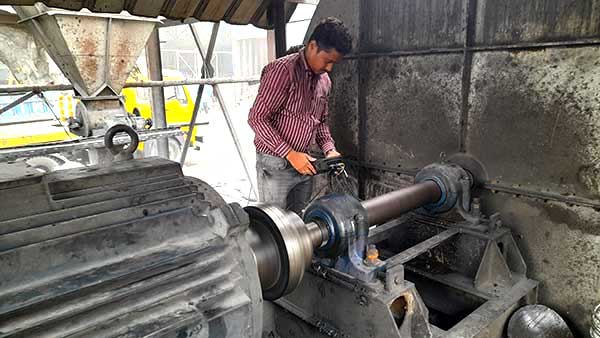
Vibration Analysis service in Bnagladesh for Industrial Reliability
Industrial machinery is a critical part of modern operations, and Vibration Analysis service in Bnagladesh helps engineers identify mechanical problems before they develop into serious failures. Rotating equipment naturally produces vibration during operation, but abnormal vibration can indicate imbalance, misalignment, looseness, bearing damage, gear defects, resonance, or other mechanical problems. Professional vibration analysis measures and evaluates these vibration characteristics to understand equipment condition. The process provides valuable information without requiring complete equipment shutdown in many applications. Engineers can use vibration data to identify developing faults and recommend suitable corrective action. This approach supports predictive maintenance and helps organizations manage equipment more effectively. Vibration analysis is useful for pumps, motors, fans, compressors, turbines, generators, gearboxes, blowers, and other rotating equipment. A properly planned service also helps reduce unexpected downtime and supports safer plant operation. Instead of depending only on visual inspection or equipment failure history, vibration monitoring provides measurable technical evidence about machine behavior. This makes it an important condition monitoring technique for industrial facilities seeking dependable performance and longer equipment service life.
Importance of Machinery Vibration Analysis
Machinery vibration analysis is important because mechanical faults often develop gradually before becoming visible or causing complete equipment failure. Changes in vibration level, frequency, phase, or waveform can provide early indications of abnormal machine behavior. Engineers can compare current measurements with historical data and established equipment condition criteria to identify changes over time. This allows maintenance teams to investigate potential problems before they result in major damage. Common issues detected through vibration analysis include unbalance, shaft misalignment, mechanical looseness, bearing deterioration, gear defects, resonance, and certain electrical problems. Early detection can help maintenance teams plan corrective work during suitable shutdown periods instead of responding to unexpected breakdowns. Vibration analysis can also support root cause investigation after a fault has occurred. The objective is not simply to measure vibration but to understand why the machine is vibrating abnormally. Proper interpretation requires knowledge of machine construction, operating conditions, rotational speed, load, installation, and maintenance history. When these factors are considered together, vibration analysis becomes a practical tool for improving reliability, maintenance planning, and operational safety.
Predictive Maintenance Through Vibration Monitoring
Vibration monitoring is widely used as part of predictive maintenance programs because it provides condition based information about operating machinery. Traditional maintenance approaches may depend on fixed schedules or corrective repairs after failure. Predictive maintenance instead uses equipment condition to determine when investigation or intervention is necessary. Regular vibration measurements can establish a machine's normal operating pattern and reveal changes that may indicate deterioration. Engineers can monitor trends and determine whether vibration is stable, increasing gradually, or changing unexpectedly. This information helps maintenance teams prioritize equipment according to actual condition. Vibration monitoring can be performed periodically or continuously depending on equipment criticality and operating requirements. Critical machinery may benefit from permanent monitoring systems, while less critical equipment may be evaluated through scheduled inspections. The collected information can also support maintenance planning by helping teams identify machines that require closer inspection. A successful predictive maintenance program combines vibration data with operating information, maintenance history, temperature measurements, oil analysis, and other suitable condition monitoring methods. This integrated approach improves decision making and helps organizations move from reactive maintenance toward more planned and controlled equipment management.
Detection of Rotating Equipment Faults
Rotating equipment is highly sensitive to mechanical condition, making it an important application for vibration analysis. Motors, pumps, fans, compressors, turbines, gearboxes, and generators contain rotating components that must remain properly balanced and aligned. A change in one component can affect the vibration behavior of the complete machine. Engineers analyze vibration measurements to identify patterns associated with specific mechanical conditions. Unbalance can produce strong vibration related to rotational speed, while misalignment may generate characteristic vibration at multiple frequency components. Mechanical looseness can create complex vibration patterns, and bearing damage may produce higher frequency signals associated with rolling element defects. Gear problems can generate vibration around gear mesh frequencies and their related components. The actual diagnosis depends on equipment design, operating speed, load, mounting conditions, and measurement location. Therefore, vibration data should be interpreted by experienced professionals rather than treated as an isolated numerical value. Proper fault identification helps maintenance teams determine whether balancing, alignment, bearing replacement, fastening, lubrication, gear inspection, or another corrective action is appropriate.
Vibration Analysis for Bearings
Bearings are essential components in rotating machinery and are among the common sources of vibration related problems. Bearing deterioration may result from inadequate lubrication, contamination, excessive loading, installation problems, misalignment, electrical damage, or normal fatigue. Vibration analysis can detect changes associated with developing bearing defects before significant physical damage occurs. Engineers may examine high frequency vibration, characteristic bearing frequencies, envelope signals, and trend data depending on the equipment and monitoring method. Early identification allows maintenance teams to inspect the bearing and investigate the underlying cause. Replacing a damaged bearing without addressing the original cause may lead to repeated failure. For example, excessive shaft misalignment or improper lubrication can shorten the life of a replacement bearing. Vibration analysis therefore supports both fault detection and maintenance investigation. Bearing condition should also be considered alongside temperature, lubrication condition, operating load, and installation quality. When properly applied, vibration monitoring provides an efficient way to identify developing bearing problems and helps organizations plan maintenance before severe damage affects other machine components.
Motor Vibration Analysis Service
Electric motors are widely used across industrial facilities, and motor vibration analysis can provide useful information about both mechanical and certain electrical conditions. Mechanical problems may include rotor unbalance, shaft misalignment, bearing deterioration, looseness, soft foot, and coupling problems. Electrical issues can also influence vibration patterns through electromagnetic forces or rotor related conditions. Engineers collect vibration measurements at suitable locations on the motor and connected equipment. The measurements are evaluated in relation to motor speed, load, construction, coupling arrangement, and operating environment. Comparing vibration trends between motor dr ive and non drive ends can provide additional diagnostic information. A motor should not be assessed only by overall vibration amplitude because frequency content and phase relationships can provide more detailed fault information. Proper vibration analysis can help determine whether a problem originates within the motor or is associated with connected equipment. This distinction is important because correcting the wrong component may not resolve the vibration issue. Regular motor condition monitoring supports reliable operation and can help reduce unplanned interruptions in industrial production systems.
Pump and Fan Vibration Monitoring
Pumps and fans operate in many industrial and commercial facilities, and vibration monitoring can help maintain their mechanical reliability. Pump vibration may be influenced by imbalance, shaft misalignment, bearing defects, looseness, cavitation, hydraulic instability, or foundation problems. Fans can experience similar mechanical problems, particularly when rotating assemblies become unbalanced due to material buildup, wear, or damage. Engineers measure vibration at appropriate bearing housings and other accessible locations to identify abnormal patterns. Operating conditions are important because changes in flow, pressure, speed, or load can influence vibration. A pump experiencing cavitation, for example, may show a vibration pattern that differs from a simple mechanical imbalance. Fan vibration can also change when airflow conditions or blade conditions change. Proper diagnosis therefore requires both vibration information and knowledge of the equipment's operating state. Routine monitoring helps identify developing problems before they affect seals, bearings, couplings, shafts, or foundations. It also provides maintenance teams with useful evidence when deciding whether equipment requires balancing, alignment, hydraulic investigation, mechanical repair, or further inspection.
Gearbox Vibration Analysis
Gearboxes transfer power and speed between rotating components, making gear condition essential for reliable machinery operation. Vibration analysis can identify problems associated with gear teeth, shafts, bearings, lubrication, alignment, and mechanical loading. Gear mesh frequencies and related vibration components can provide useful diagnostic information when interpreted correctly. Damaged or worn gear teeth may produce changes in vibration patterns that become more pronounced as the condition develops. Bearing defects within the gearbox can also generate characteristic signals. Engineers should consider gearbox design, gear ratio, rotational speed, load, lubrication condition, and operating history when interpreting results. A vibration measurement taken without understanding these factors may lead to incorrect conclusions. Trend monitoring is particularly useful because gradual changes can indicate developing wear. Sudden changes may require immediate investigation because they can indicate a new fault or operating problem. Vibration analysis can therefore support gearbox maintenance by helping engineers determine when detailed inspection or corrective work is appropriate. Early diagnosis may prevent secondary damage to gears, shafts, bearings, and connected machinery.
Shaft Alignment and Vibration Diagnosis
Shaft misalignment is a common cause of excessive vibration in coupled rotating machinery. It can occur because of incorrect installation, foundation movement, thermal effects, coupling problems, or changes in machine position. Misalignment can increase loads on bearings, couplings, seals, and shafts and may reduce equipment service life. Vibration analysis can provide evidence that misalignment may be present by examining vibration frequency patterns and phase relationships. However, vibration data should be combined with direct alignment measurements when shaft alignment is suspected. Laser alignment systems or other suitable precision methods can be used to verify machine position. Correcting alignment can reduce vibration and improve mechanical performance when misalignment is the actual root cause. Engineers should also consider soft foot, pipe strain, foundation condition, and thermal growth because these factors can affect alignment during operation. A reliable vibration analysis service therefore does more than identify abnormal vibration. It helps guide further investigation and supports a systematic approach to determining the actual source of mechanical distress. Proper alignment contributes to smoother operation, improved bearing life, and more dependable rotating equipment.
Unbalance and Mechanical Looseness Detection
Unbalance occurs when the mass distribution of a rotating component is not uniform around its axis of rotation. It can develop because of manufacturing variation, wear, corrosion, material buildup, deformation, or damage. Unbalance often produces vibration associated with the rotational speed and may increase as operating speed changes. Mechanical looseness is another common vibration problem and can involve loose bolts, worn fits, damaged supports, or other connections. Looseness may create complex vibration patterns and can worsen if corrective action is delayed. Engineers analyze frequency spectra, waveform characteristics, phase information, and operating conditions to distinguish between possible causes. Balancing may be required when unbalance is confirmed, while looseness requires inspection and correction of the mechanical connection or support. Simply reducing vibration without correcting the source may provide only temporary improvement. A professional vibration analysis service therefore focuses on diagnosis and root cause identification. Understanding whether vibration results from unbalance, looseness, alignment, bearing condition, or another mechanism allows maintenance teams to select a more appropriate corrective solution and avoid unnecessary component replacement.
Structural Vibration Assessment
Vibration analysis is not limited to rotating machinery. Structures, floors, platforms, bridges, industrial supports, and other constructed systems may also require vibration assessment. Structural vibration can result from machinery operation, human activity, traffic, wind, construction activity, or other dynamic sources. Engineers evaluate vibration characteristics to determine whether movement may affect structural performance, equipment operation, occupant comfort, or sensitive processes. Measurements may include vibration amplitude, frequency, acceleration, velocity, and other parameters depending on the assessment objective. Understanding the source and transmission path is important because vibration can travel through foundations, floors, structural frames, and connected equipment. In industrial facilities, excessive structural vibration can also influence machinery alignment and equipment reliability. A structural vibration assessment can therefore support both building safety and machine performance. Engineers may recommend additional monitoring, structural review, isolation measures, equipment relocation, or other corrective actions depending on the findings. The assessment should consider the dynamic characteristics of the structure and the operating behavior of the vibration source. Professional interpretation ensures that measured vibration is evaluated in the correct engineering context.
Vibration Measurement and Data Collection
Reliable vibration analysis depends on accurate field measurement and proper data collection. Engineers select suitable measurement locations based on equipment design, bearing positions, accessibility, and diagnostic requirements. Vibration sensors may measure acceleration, velocity, or displacement, depending on the application and frequency range of interest. Measurements can be collect e d in different directions to provide information about machine behavior. Horizontal, vertical, and axial readings can reveal different characteristics of mechanical faults. Operating conditions should be recorded during measurement because vibration behavior may change with speed, load, temperature, flow, or process conditions. Data should also be collected consistently so that future measurements can be compared with previous results. Poor sensor placement, inconsistent operating conditions, or inadequate measurement procedures can reduce diagnostic reliability. Experienced technicians therefore follow controlled procedures and verify equipment identification before collecting data. Proper data collection creates a dependable foundation for analysis. The final interpretation is only as reliable as the quality and relevance of the measurements used to develop it.
Vibration Spectrum and Trend Analysis
Vibration spectrum analysis helps engineers examine the frequency components contained within a machine's vibration signal. Different mechanical conditions can produce different frequency patterns, allowing specialists to investigate possible fault sources. Overall vibration values provide a useful indication of machine condition, but spectrum analysis can provide deeper diagnostic information. Trend analysis adds another important dimension by showing how vibration changes over time. A stable vibration pattern may indicate normal operation, while a gradual increase can suggest developing deterioration. A sudden change may require immediate investigation. Engineers compare current results with historical measurements and appropriate technical criteria to evaluate condition. Trend data is especially valuable for predictive maintenance because it supports decisions based on equipment behavior rather than fixed assumptions. However, vibration levels can change because of process conditions, speed, load, or measurement differences. These factors must be considered before interpreting a trend. A professional analysis therefore combines frequency information, time waveform data, machine history, operating conditions, and engineering judgment to establish a meaningful diagnosis and maintenance recommendation.
Benefits of Professional Vibration Analysis in Bangladesh
Professional Vibration Analysis service in Bnagladesh can provide valuable benefits for industrial plants, commercial facilities, power systems, manufacturing operations, and other organizations that depend on rotating equipment. Early fault detection can help reduce unexpected breakdowns and improve maintenance planning. Condition based information can also help maintenance teams focus resources on equipment that shows evidence of deterioration. Vibration analysis may reduce unnecessary component replacement because maintenance decisions can be supported by actual machine condition. It can also help identify root causes such as imbalance, misalignment, looseness, bearing problems, or operating issues. Better equipment condition supports stable production and can contribute to safer working environments. The service is particularly useful when integrated with a broader predictive maintenance program. Engineers can combine vibration results with thermal inspection, oil analysis, electrical testing, and visual inspection to obtain a more complete view of equipment health. The overall objective is dependable machinery performance, controlled maintenance, and improved asset reliability. Selecting a competent vibration analysis provider with suitable instruments, experienced engineers, and systematic reporting can help organizations make better technical decisions and maintain critical equipment more effectively.